
How Long Do Turkey Teeth Last?
In long-term studies around 9 in 10 porcelain veneers are still in place after 10 years, and about 95 in 100 dental implants. Turkey teeth last as long as the same treatment anywhere else: what decides it is how they were planned and how you look after them.
- Lifetime guarantee on all implants
- Five-year guarantee on crowns
- Implant passport
- Aftercare after you fly home
New to the term? Read what Turkey teeth are — and how to do them right.
How long do Turkey teeth last? The short answer
Turkey teeth last as long as the same treatment done anywhere else: in long-term studies around 9 in 10 porcelain veneers are still in place after 10 years, and about 95 in 100 dental implants.¹ ² What decides how long yours last is how they were planned — veneers where the tooth is sound, crowns only where it needs one — and how you look after them, not the country they were made in.
"Turkey teeth" are veneers, crowns and implants made of the same materials UK dentists use, so the evidence is the same evidence. The table sums up what the long-term studies show. "Still in place" means the veneer, crown or implant is still in the mouth and working, sometimes after a small repair.
| Treatment | What long-term studies show | What makes the difference | At TUA Dental |
|---|---|---|---|
| Porcelain and E.max veneers | Around 9 in 10 still in place after 10 years; roughly 8–9 in 10 after 20² | Bonding to enamel, minimal preparation, no grinding | E.max, £185 per tooth |
| Composite veneers | About 8 in 10 last 5 years; many need repair or replacement by 10³ | Staining, chipping and wear of the resin | We recommend ceramic |
| Zirconia and E.max crowns | About 97–98 in 100 still in place after 5 years; for E.max, about 84–97 in 100 at 10 years⁴ | A sound core, healthy gums at the edge, no grinding | Five-year guarantee |
| Dental implants | About 95 in 100 still in place after 10 years; around 9 in 10 after 20¹ | No smoking, healthy gums, regular check-ups | Lifetime guarantee |
| All-on-4 and All-on-6 | Over 9 in 10 implants and nearly all fixed teeth still in use after 10 years or more; repairs to the teeth are common⁵ | Check-ups, hygiene, a night guard if you grind | Lifetime guarantee on the implants, five years on the crowns |
How long do veneers from Turkey last?
With good care, our dentists expect porcelain and E.max veneers to last 15–20 years, and the studies agree: around 9 in 10 are still in place after 10 years, and studies that followed patients for 20 years found roughly 8 to 9 in 10 still working.² For E.max veneers specifically, a review of three studies with more than 1,100 veneers found about 97 in 100 still in place after seven years or more.² Every type of veneer, composite included, is compared in how long do veneers last?
Two things make the difference. The first is the bond: a veneer bonded to enamel holds far better than one bonded to the softer layer beneath, which is why veneers last best when the tooth is prepared as little as possible — 0.3–0.7 mm from the front at TUA Dental. The second is grinding: in one 20-year study, patients who ground their teeth were several times more likely to lose a veneer, and a night guard is the simple answer.²
When a veneer is eventually replaced, the new one is made on the same lightly prepared tooth, so no further tooth is lost. How much tooth each treatment removes, and why it matters, is explained in veneers or crowns: shaving, materials and colour chart.
How long do zirconia and E.max crowns last?
With good care, our dentists expect a zirconia crown to last 15 years or more. About 97 in 100 monolithic zirconia crowns and 98 in 100 E.max crowns are still in place after five years, according to the most recent large review.⁴ For E.max crowns, long-term studies report about 84 to 97 in 100 still in place after ten years; ten-year data for monolithic zirconia are still being collected, and the early results are strong.
A crown itself doesn't decay, but the tooth underneath can, where it meets the crown at the gum. That is why the edge of a crown is the place to clean most carefully, with floss or interdental brushes every day, and why check-ups matter. Teeth that have had root canal treatment and teeth of people who grind need more care. At TUA Dental every crown carries a five-year guarantee, and your treatment record tells your own dentist exactly what was made and from which material.
Send six photos of your teeth — your free plan says which treatment each tooth needs and what it costs.
How long do dental implants last?
Dental implants are the longest-lasting way to replace a tooth: in long-term studies about 95 in 100 implants are still in place after ten years, and around 9 in 10 after twenty.¹ The crown on top may need replacing sooner than the implant itself — one long-term study found about 9 in 10 of the original crowns still in place after ten years or more.¹
Implants are made to last a lifetime, and the main threats are known: smoking, which roughly doubles the risk of an implant failing, and gum infection around the implant (peri-implantitis), which regular check-ups and good cleaning prevent.⁶ That is why the crowns on our implants are usually screwed onto a titanium base rather than cemented: a dentist can take them off to clean or repair them without damaging anything. Every implant at TUA Dental carries a lifetime guarantee, and you go home with an implant passport recording the brand, size and position, so any dentist can look after it. Why the implant and the crown on it last differently is explained in how long do dental implants last?
How long do All-on-4 and All-on-6 last?
In studies that followed patients for 10 to 18 years, over 9 in 10 All-on-4 implants and nearly all the fixed teeth on them were still in use.⁵ What does need attention over the years is the teeth themselves: small repairs to the crowns or the screws holding them are common, which is why check-ups are part of the treatment, not an extra.
At TUA Dental All-on-4 and All-on-6 carry 12 fixed zirconia crowns per jaw, made in our own CAD/CAM lab; zirconia is very hard to chip, and the screw-retained design means a dentist can remove the teeth for cleaning or repair. The implants carry a lifetime guarantee and the crowns five years. How the treatment works is on our All-on-4 and All-on-6 page.
Composite or porcelain: why the material matters
Composite veneers are cheaper and quicker, but they don't last as long: about 8 in 10 last five years, and many need repair or replacement within ten.³ Ceramic veneers fail at roughly a third of the rate of composite each year in long-term practice data, and they keep their colour and gloss.³
That is the reason our dentists recommend ceramic — E.max for veneers, zirconia or E.max for crowns — for a smile you want to keep looking the same for many years. If you have been quoted composite veneers elsewhere, send us the same photographs and we will tell you, tooth by tooth, which option we would choose and why.
What makes Turkey teeth last — and what shortens their life
Four things make the biggest difference to how long veneers, crowns and implants last: grinding, smoking, gum health and check-ups. All four are in your hands, and none of them depends on where the treatment was done.
- Grinding and clenching. The biggest risk for veneers and crowns; a night guard protects them while you sleep.²
- Smoking. It roughly doubles the risk of an implant failing and stains the edges of veneers and crowns.⁶
- Gum health. Brushing twice a day and cleaning between the teeth protect the edges of crowns and the gum around implants.
- Check-ups. Six-monthly check-ups with your own dentist catch small problems early; in one study, patients with early gum inflammation who skipped maintenance were more than twice as likely to develop infection around their implants.⁶
Planning matters just as much. Healthy teeth crowned when they only needed veneers lose most of their enamel, and some later need root canal treatment; implants loaded before the bone has healed can fail early. These are the mistakes behind the stories you may have read — why Turkey teeth go wrong and how to avoid it explains how a well-run clinic prevents each one.
Do Turkey teeth last as long as teeth done in the UK?
Yes — the materials and the evidence are the same. E.max veneers and crowns, monolithic zirconia and branded implants last as long in Kuşadası as in London, provided they are planned properly and looked after.
The difference you may have read about is not the country but the planning: a set of crowns rushed onto healthy teeth in a few days will not last like veneers designed to your face and tried in first. At TUA Dental the decision is made tooth by tooth in your free treatment plan, your design is approved before any preparation, implants heal for two to three months before the crowns go on, and every implant gets a passport. With those in place, your own dentist can look after your teeth like any others.
What happens when a veneer or crown needs replacing?
A veneer or crown that eventually needs replacing is remade on the same prepared tooth, so no further tooth is lost, and a crown on an implant is unscrewed and replaced without touching the implant. Any dentist can do it with your treatment record.
If anything chips, loosens or feels wrong after you get home, you message your coordinator with a photograph, and our dentist tells you what to do; if a visit is needed, we plan it with you. Your guarantee is written down: a lifetime on implants and five years on crowns.
Real results
Every case is photographed in the clinic before and after; our gallery shows veneers, crowns and implants in shades chosen with the patient.
 BeforeAfter
 BeforeAfter
 BeforeAfter
"Still in place" figures are survival rates from the studies below: the restoration is still in the mouth and working, sometimes after a repair. Results vary with the patient, the clinic and the case.
¹ Dental implants: Howe, Keys and Richards, Journal of Dentistry 2019 (systematic review, 18 studies, 2,688 implants: 96.4% at 10 years); Lupi and colleagues, International Journal of Oral and Maxillofacial Surgery 2026 (93% at 20 years); Hjalmarsson and colleagues, European Journal of Oral Implantology 2016 (single implants: implants 95%, original crowns 89.5% at 10 years or more).
² Veneers: Klein and colleagues, Journal of Esthetic and Restorative Dentistry 2025 (systematic review, 29 studies: 96% at a mean of 10.4 years; lithium disilicate 96.8%); Beier and colleagues, International Journal of Prosthodontics 2012 (93.5% at 10 years, 83% at 20; grinding raised the risk of failure about eightfold); Layton and Walton, International Journal of Prosthodontics 2012 (96% at 10 years, 91% at 20).
³ Composite veneers: Lim and colleagues, Journal of Evidence-Based Dental Practice 2023 (88% over 2–8 years); Mazzetti and colleagues, Dental Materials 2022 (annual failure rates of about 4% for composite and 1.2–1.4% for ceramic veneers).
⁴ Crowns: Pjetursson and colleagues, International Journal of Prosthodontics 2026 (systematic review of 64 studies: monolithic zirconia 96.8%, lithium disilicate 98.5% at 5 years); Malament and colleagues, Journal of Prosthetic Dentistry 2019 and 2021 (lithium disilicate, about 96.5% at 10 years); Rauch and colleagues, Clinical Oral Investigations 2018 (83.5% at 10 years, all causes of failure counted).
⁵ All-on-4: Maló and colleagues, Journal of the American Dental Association 2011 and Clinical Implant Dentistry and Related Research 2019 (implants 93–95%, fixed teeth about 99% after 10–18 years); Agliardi and colleagues, Clinical Oral Implants Research 2023 (implants about 97% at 15 years).
⁶ Risk factors: Chrcanovic and colleagues, Journal of Dentistry 2015 (implant failure 6.35% in smokers against 3.18% in non-smokers); Costa and colleagues, Journal of Clinical Periodontology 2012 (in patients who already had inflammation around their implants, infection developed in 43.9% without maintenance against 18.0% with it, over 5 years).
Last updated:
Your new smile starts here
Your free treatment plan in 3 steps
Step 1Fill in the form
Step 2We plan your treatment
Step 3We plan your trip
 FreeYour personal treatment plan
Your English-speaking patient coordinator will get in touch and ask you for:
- Photos of your teeth
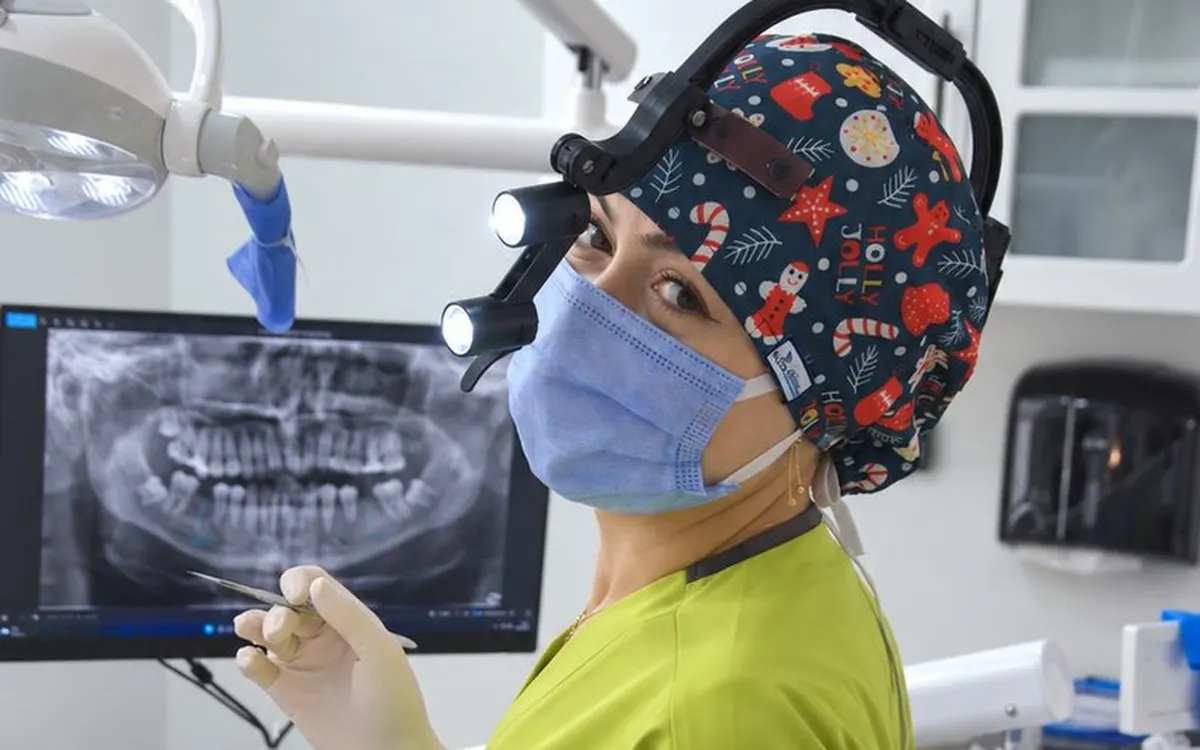
- Your X-ray, if you have one
- Your dentist's treatment plan or quote, if you have one
From these, our experienced dentist prepares your free treatment plan – with all treatments and prices. Hotel & transfer freeYour stay in Kuşadası
As soon as your treatment plan is ready, we take care of everything else:
- Your appointment is set to fit your treatment plan.
- We arrange your hotel and VIP airport transfer (free of charge).
- We help you plan your flight free of charge.
If you wish, we go through your plan with you beforehand in a video call, by appointment.
 1Face from the front,
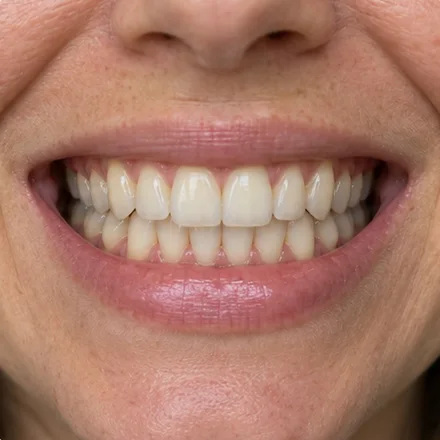 2Teeth together,
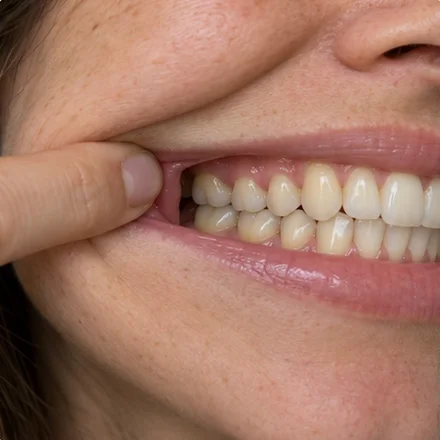 3Right side
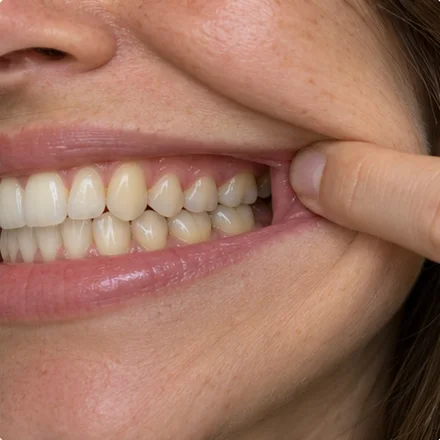 4Left side
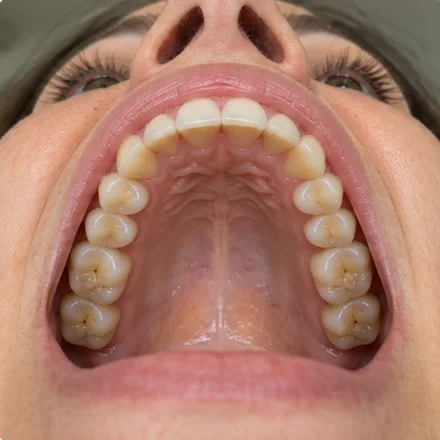 5Upper jaw
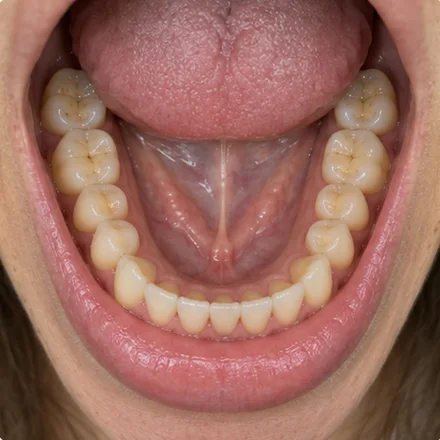 6Lower jaw
How long Turkey teeth last: frequently asked questions
How long do Turkey teeth last?
As long as the same treatment done anywhere else, because the materials are the same. In long-term studies around 9 in 10 porcelain veneers are still in place after 10 years, about 97–98 in 100 ceramic crowns after five, and about 95 in 100 dental implants after ten. What decides how long yours last is the planning — veneers where the tooth is sound, crowns only where needed, implants given time to heal — and your care: no smoking, a night guard if you grind, good cleaning and six-monthly check-ups.
How long do veneers from Turkey last?
With good care, 15–20 years: around 9 in 10 porcelain and E.max veneers are still in place after 10 years, and long-term studies found roughly 8 to 9 in 10 still working after 20. Veneers last longest when they are bonded to enamel — which needs minimal preparation, 0.3–0.7 mm at TUA Dental — and when you don't grind your teeth, or wear a night guard if you do. Composite veneers are a different matter: about 8 in 10 last five years.
How long do zirconia crowns last?
With good care, 15 years or more. In the most recent large review, about 97 in 100 monolithic zirconia crowns were still in place after five years, with very little chipping; ten-year data are still being collected and the early results are strong. E.max crowns perform similarly, with long-term studies reporting about 84 to 97 in 100 at ten years. What shortens a crown's life is grinding, gum disease at its edge and missed check-ups. At TUA Dental every crown carries a five-year guarantee.
Do dental implants last forever?
Implants are made to last a lifetime, and in long-term studies about 95 in 100 are still in place after ten years and around 9 in 10 after twenty. The crown on top may need replacing sooner, which is why ours are usually screwed onto a titanium base and can be removed without damage. Smoking and gum infection around the implant are the main risks, and both are preventable. Every implant at TUA Dental carries a lifetime guarantee and an implant passport.
How long do All-on-4 implants last?
In studies that followed patients for 10 to 18 years, over 9 in 10 All-on-4 implants and nearly all the fixed teeth on them were still in use. Small repairs to the teeth or the screws are common over the years, so check-ups are part of the treatment. At TUA Dental All-on-4 carries 12 fixed zirconia crowns per jaw, screw-retained so a dentist can remove them for cleaning or repair, with a lifetime guarantee on the implants and five years on the crowns.
Will I need to replace my Turkey teeth?
Possibly one day, as with any veneer or crown made anywhere: well-made ceramic lasts many years, but not necessarily a lifetime. When a veneer or crown is replaced, the new one is made on the same prepared tooth, so no further tooth is lost — which is why it matters that healthy teeth get veneers, not crowns, in the first place. A crown on an implant is unscrewed and replaced without touching the implant. Any dentist can do it with your treatment record.
How long does teeth whitening last?
Six to eighteen months, depending on your habits: coffee, tea, red wine and smoking bring the colour back sooner. One more session refreshes it. Ceramic veneers and crowns don't whiten and don't stain — they keep the shade they were made in — which is why we whiten your own teeth first and match new teeth to the brighter shade. At TUA Dental professional whitening is from £85, with check-up, X-ray, scale and polish included. No hidden costs: the price in your treatment plan is the price you pay.
What shortens the life of veneers, crowns and implants?
Four things: grinding or clenching your teeth, smoking, gum disease and missed check-ups. Grinding is the biggest risk for veneers and crowns, and a night guard takes care of it; smoking roughly doubles the risk of an implant failing; cleaning between the teeth protects the edges of crowns and the gum around implants; and six-monthly check-ups catch small problems early. Biting very hard objects — ice, pen tops, nails — is the other habit to drop.